
PREF Group provides CNC and hydraulic press brake machine for high-precision sheet metal bending, our machines range from 30T to 12000T capacity and are widely used in steel fabrication and industrial manufacturing.

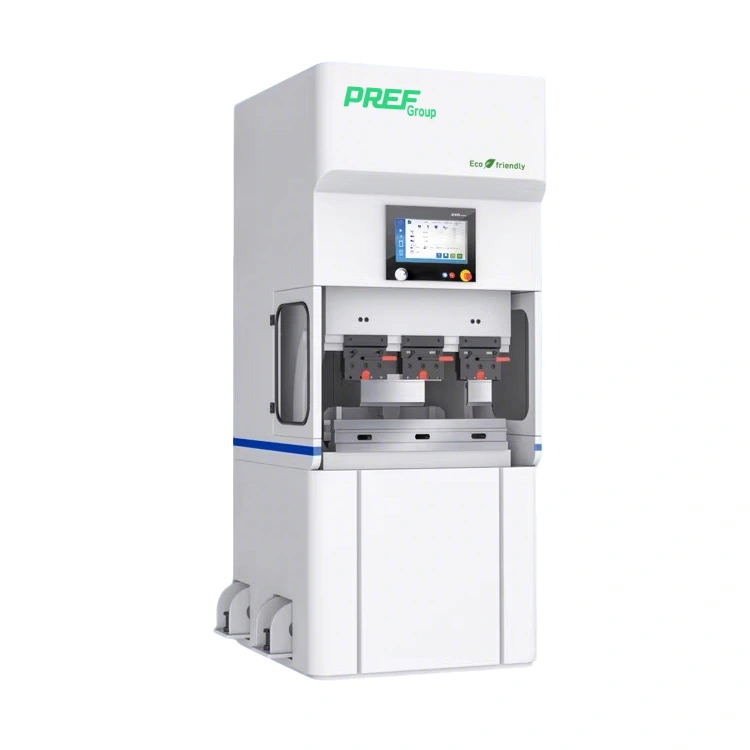
NC press brake machines provide stable and economical sheet metal bending solutions for small and medium fabrication workshops with simple operation and reliable performance.
Main Features:
A large floor-type boring and milling machine is used for integral machining of the press-brake frame.
The shaft body is made of forged material, with high rigidity and good elasticity, equipped with a fine-adjustment device, and weak eccentric-load resistance.
Users can customize tooling segments of 10, 15, 20, 30, 50, 100, and 300 cm.
ESTUN or DELEM brand CNC systems are available for users to choose.
Ball screws and linear guideways are used and driven by servo motors, enabling fast and accurate back-gauge positioning.
The stop-finger height adopts an integrated adjustment design and can be manually adjusted.
It improves tooling change speed and increases working efficiency.
Share:
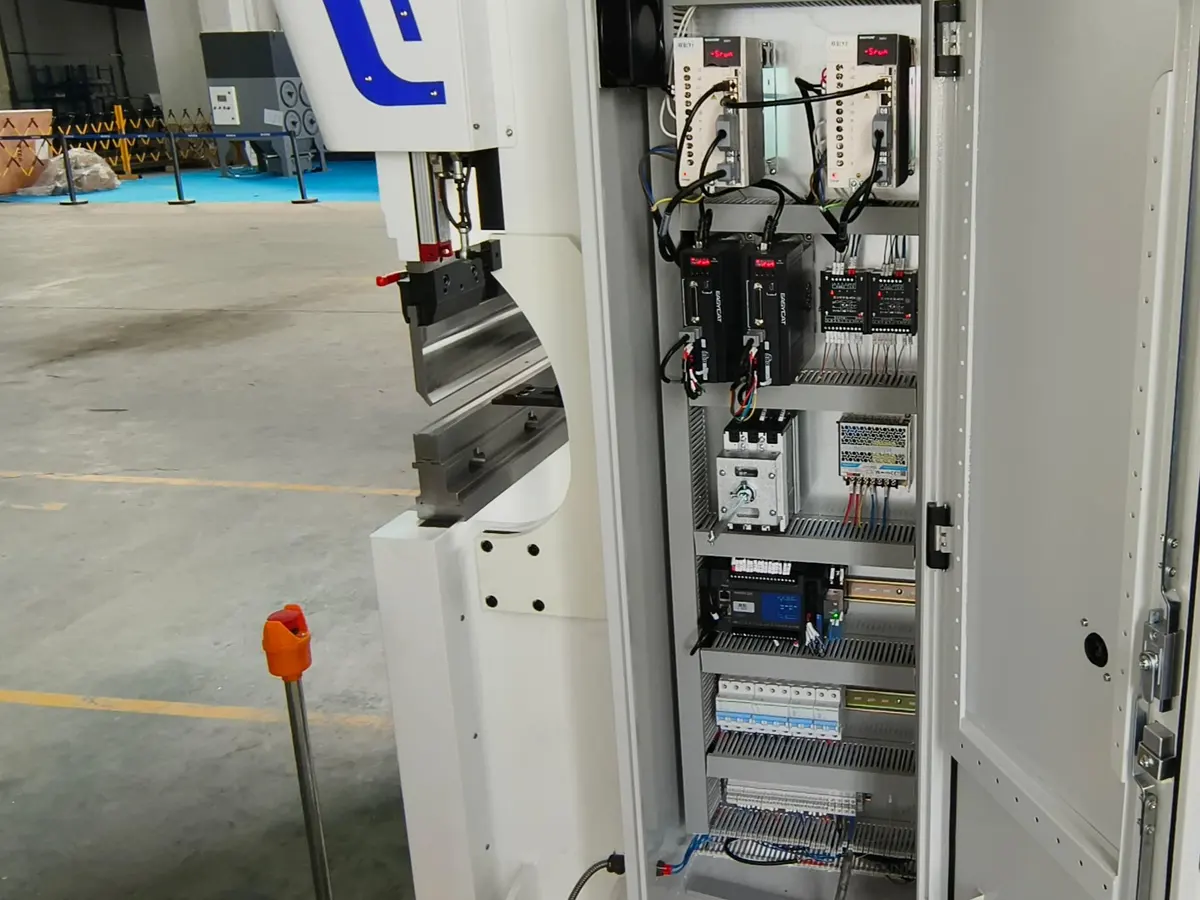
The electrical cabinet integrates servo drives, control modules, protection components, power supply units, terminals, and signal wiring in a clean internal layout. A well-arranged cabinet improves heat dissipation, reduces signal interference, and makes routine inspection easier.
For an electric press brake, the cabinet directly supports axis control, motor response, emergency stop logic, and operation safety. Clear wiring paths and protected electrical components help the machine maintain stable performance during repeated bending cycles.
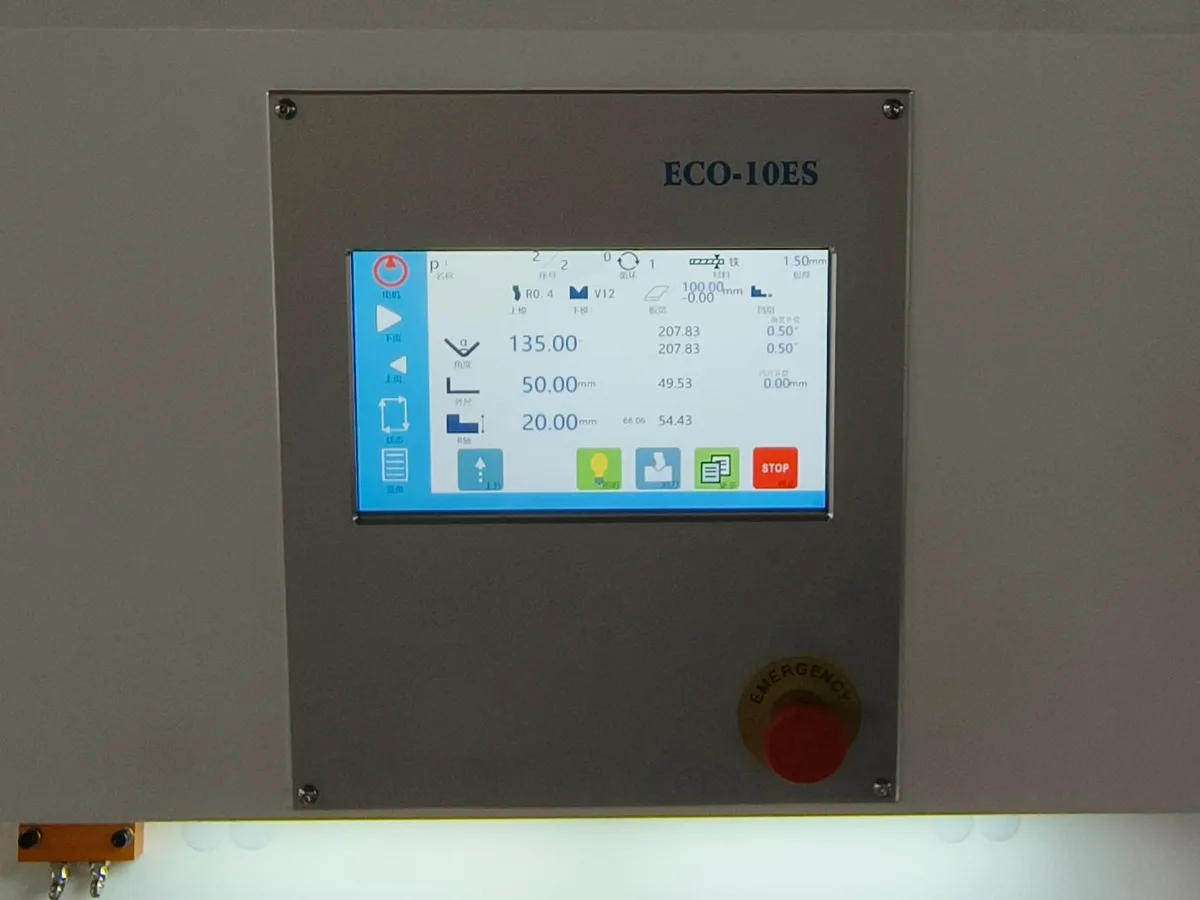
The control system provides the main operation interface for angle setting, bending depth, backgauge position, program steps, and production parameters. The touch-screen layout helps operators complete setup faster and manage common bending tasks more clearly.
Program storage, parameter editing, bending-step control, and emergency stop access improve daily usability. The controller works with the servo drive system to keep ram movement, positioning, and bending repeatability stable.
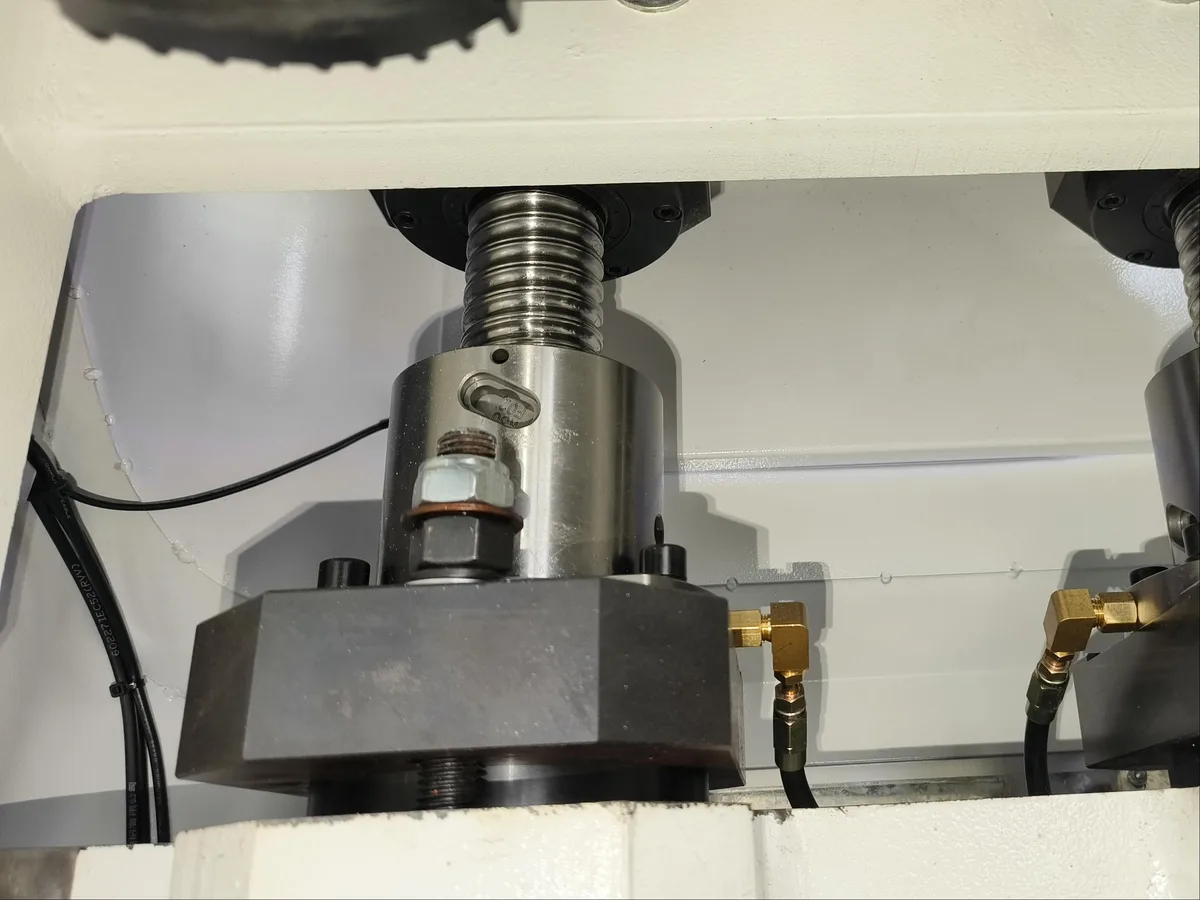
The main drive ball screw converts servo motor rotation into accurate linear movement for the bending axis. This structure gives the electric press brake cleaner transmission, faster response, and more precise position control than traditional hydraulic drive layouts.
High-rigidity screw support and smooth transmission help improve bending-depth repeatability. The ball screw drive is especially useful for short stroke bending, small parts, frequent angle correction, and production that requires consistent forming accuracy.
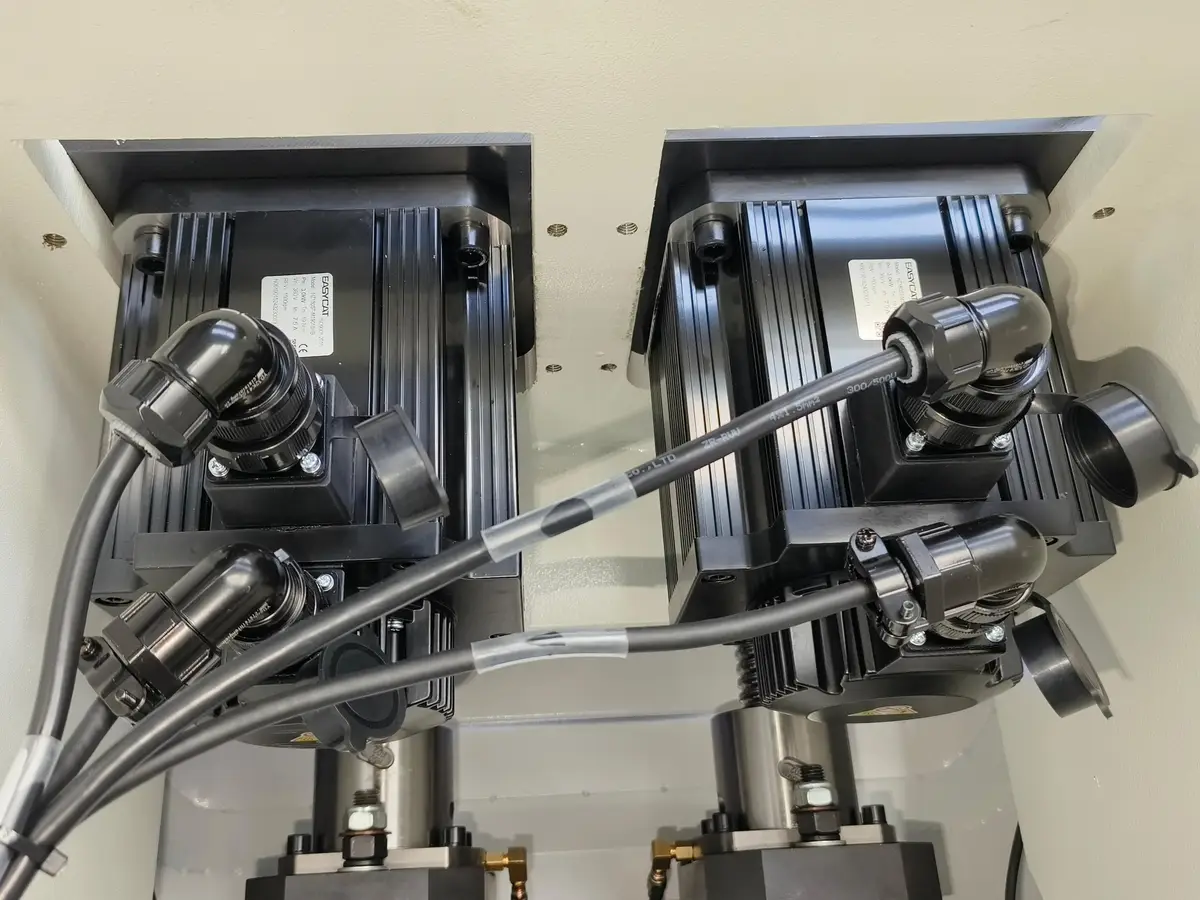
The main servo motors provide the direct driving force for the electric bending system. They deliver fast response, accurate torque control, and efficient energy use during approach, bending, and return movements.
Servo drive technology reduces idle energy consumption and improves movement controllability. For compact electric press brakes, this supports quieter operation, faster cycle response, and stable bending performance in daily sheet metal fabrication.
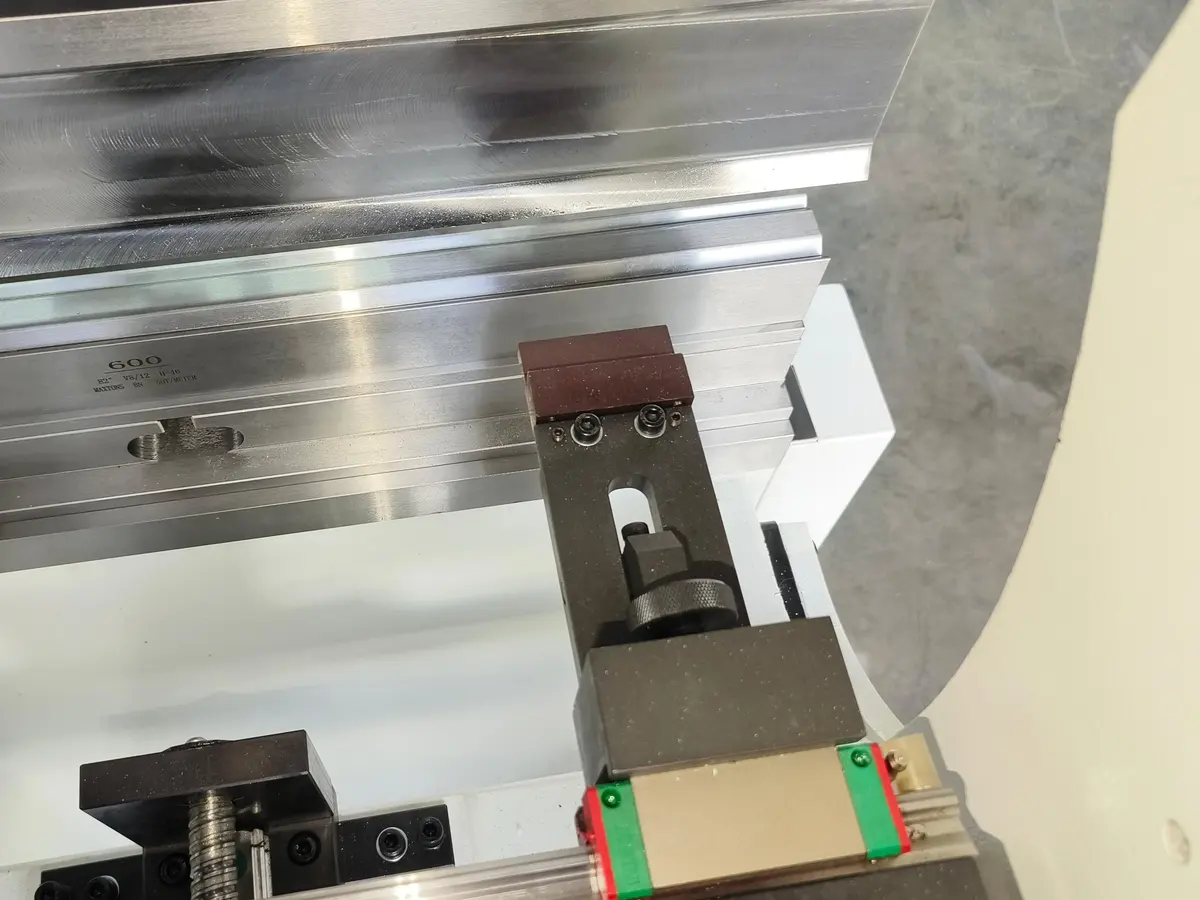
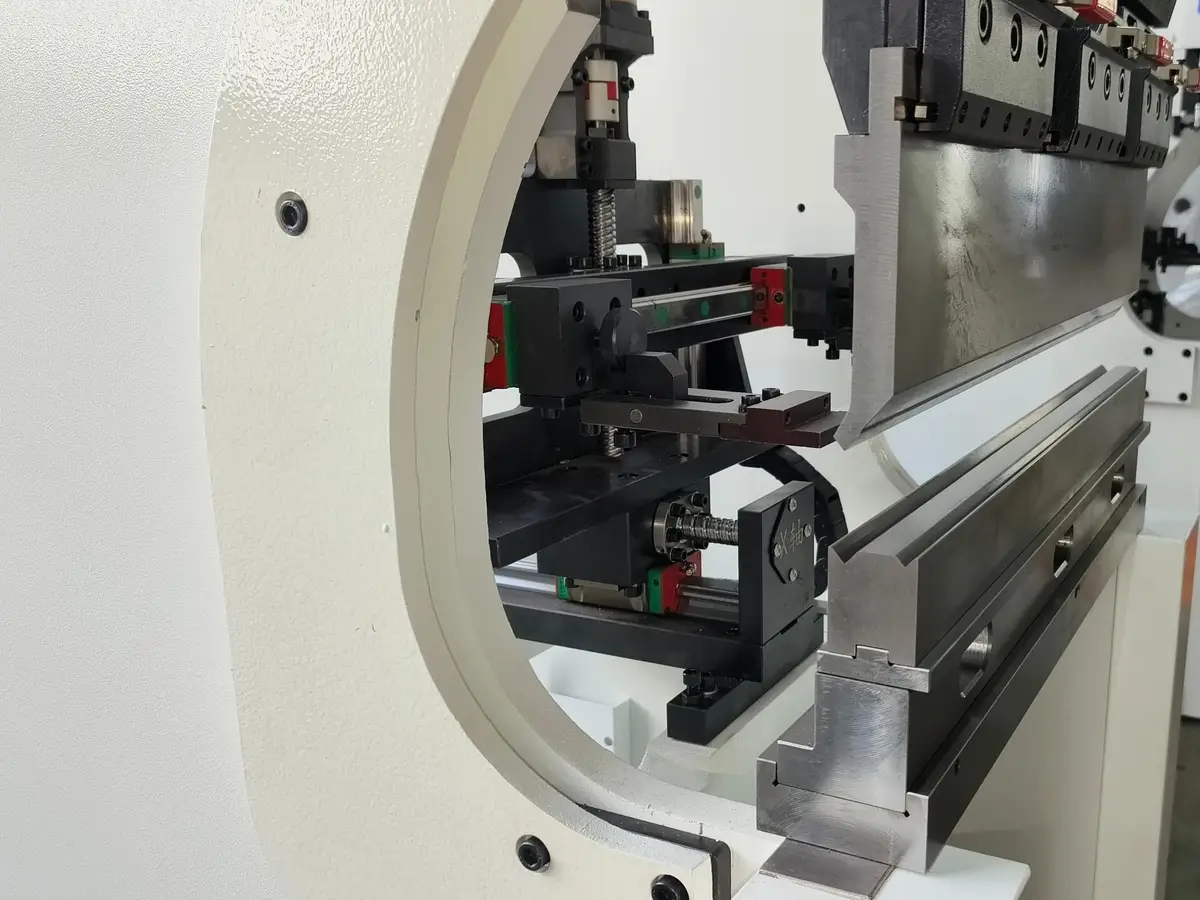
The stop finger is used to position the sheet before bending and directly affects flange-size repeatability. A rigid and adjustable stop finger helps the operator align the workpiece quickly and keep dimensions consistent across repeated parts.
This component is important for small workpieces, narrow flanges, and multi-step bending. Correct stop finger setup reduces manual measuring time and improves efficiency for batch production.
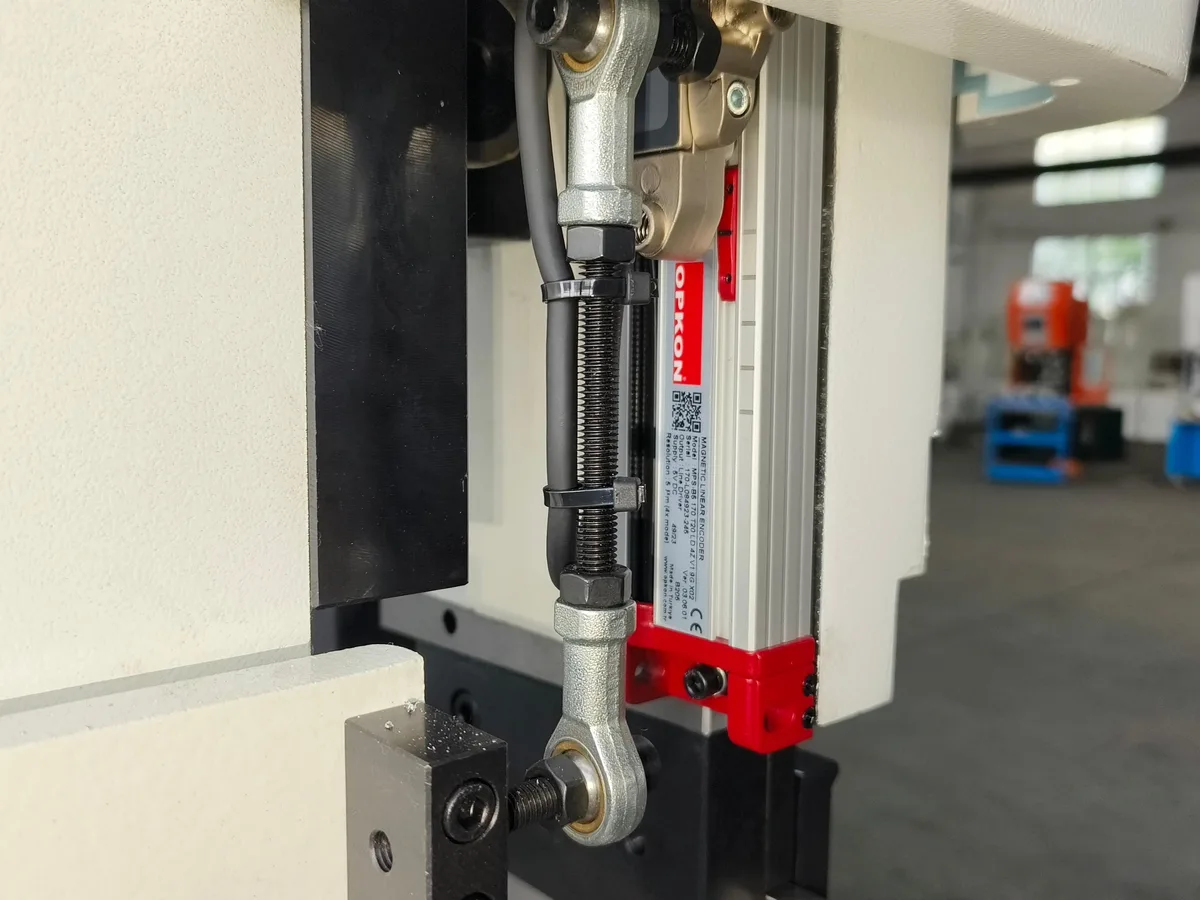
The linear scale provides high-resolution position feedback for the bending axis. It allows the control system to monitor actual ram position and correct movement deviation during operation.
Closed-loop feedback improves bending-depth accuracy and repeatability. For an electric press brake, linear scale feedback is important for stable angle control, precision forming, and long-term machine consistency.
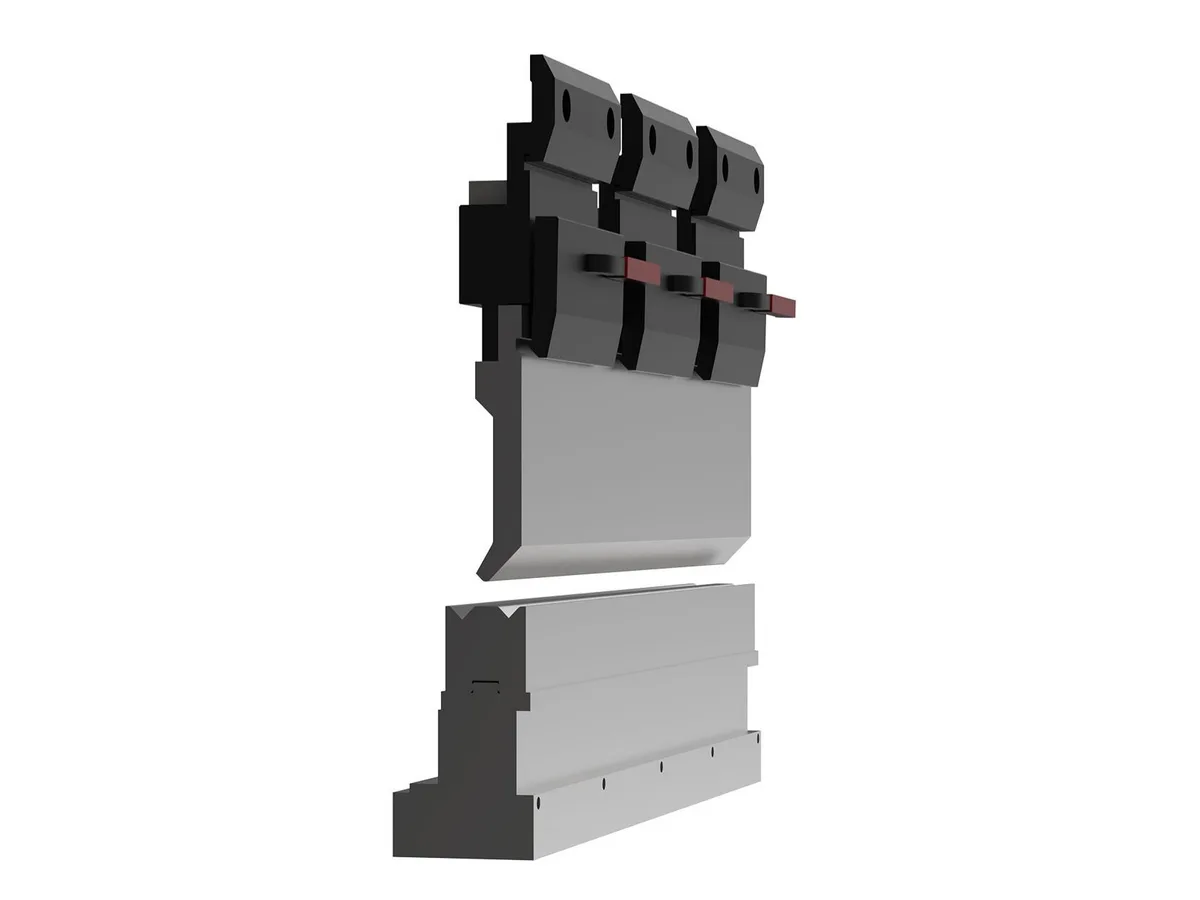
The punch and die determine the final bending angle, inside radius, flange shape, and surface quality. Tooling selection should match material type, sheet thickness, bending length, and the required part geometry.
Accurate tool alignment and stable clamping help improve forming quality and reduce trial bending. For electric press brakes, suitable tooling supports fast setup and repeatable bending results on small and medium sheet metal parts.
The backgauge positions the workpiece before each bend and is one of the key systems affecting bending efficiency. A stable backgauge structure helps keep flange dimensions accurate and reduces manual positioning work.
Guide rails, screw transmission, and adjustable stop fingers allow the backgauge to handle different part sizes. For electric press brakes, precise backgauge movement is useful for repeated jobs, small parts, and multi-step bending programs.
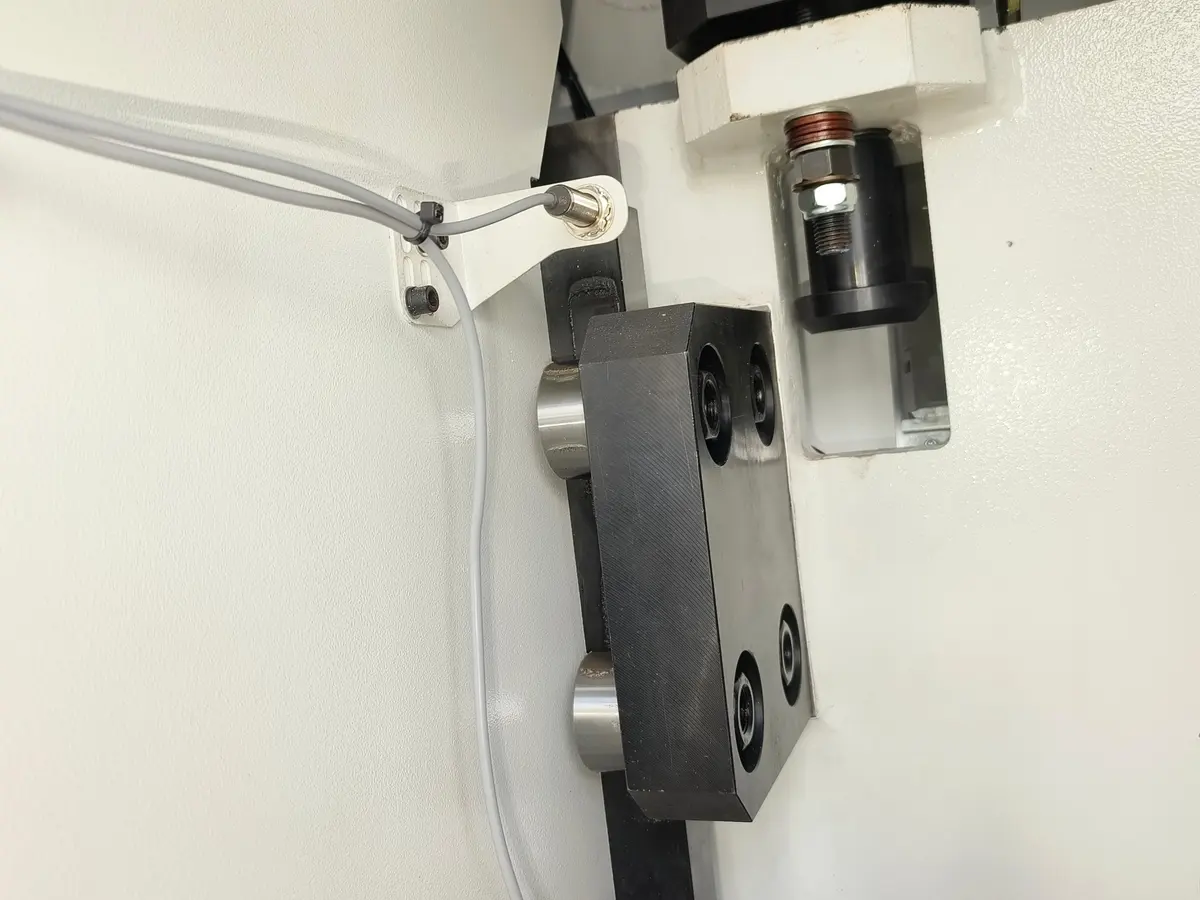
The stroke protection switch monitors the movement limit of the bending mechanism and provides an additional protection signal for abnormal over-travel conditions.
This device helps protect the transmission system, tooling area, and machine structure during setup, maintenance, and repeated production. It supports safer operation and improves machine protection reliability.
Bending Force: 30 KN
Bending Length: 200 mm
Column Distance: 300 mm
Throat Depth: N/A
Stroke: 120 mm
Open Height: 420 mm
Approaching Speed: 200 mm/s
Ram Speed: 1-30 mm/s
Return Speed: 200 mm/s
Main Motor: 2 kW
Dimensions: 700 x 700 x 1980 mm
Weight: 320 kg
Bending Force: 60 KN
Bending Length: 400 mm
Column Distance: 370 mm
Throat Depth: 160 mm
Stroke: 120 mm
Open Height: 420 mm
Approaching Speed: 200 mm/s
Ram Speed: 1-30 mm/s
Return Speed: 200 mm/s
Main Motor: 3 kW
Dimensions: 750 x 750 x 1980 mm
Weight: 560 kg
Bending Force: 120 KN
Bending Length: 600 mm
Column Distance: 450 mm
Throat Depth: 200 mm
Stroke: 120 mm
Open Height: 420 mm
Approaching Speed: 200 mm/s
Ram Speed: 1-30 mm/s
Return Speed: 200 mm/s
Main Motor: 5.5 kW
Dimensions: 850 x 850 x 2080 mm
Weight: 760 kg
Parameters change without notice. Final model configuration, voltage, controller, tooling, safety system, and quotation data should be confirmed according to the actual order.
Send material type, thickness range, part drawings, required tolerance, daily output target, workshop layout, voltage requirement, and any existing process photos or videos. PREF Group can use this information to recommend a practical configuration.
Yes. The final machine can be discussed according to working size, capacity, controller preference, safety system, tooling, automation, voltage, and shipping requirements.
The parameter tables are used for model selection and comparison. Final order specifications should be confirmed with PREF Group before quotation, production, or publishing a final datasheet.
Start from the part drawing and the production bottleneck. If the main issue is bending, cutting, welding, grooving, punching, or spare parts compatibility, PREF Group can compare the related product category and recommend the better fit.
Three Starting Options
Five Basics Before Model Selection
Know the Full Process
Early Warning Signs to Expand
Choose the Right Upgrade Path
Balance the Entire Production Flow
Classification by Distributor Strength
What kind of Support Can Help Dealers
Simple and Fair Cooperation Process is Open to Distributors Worldwide.